
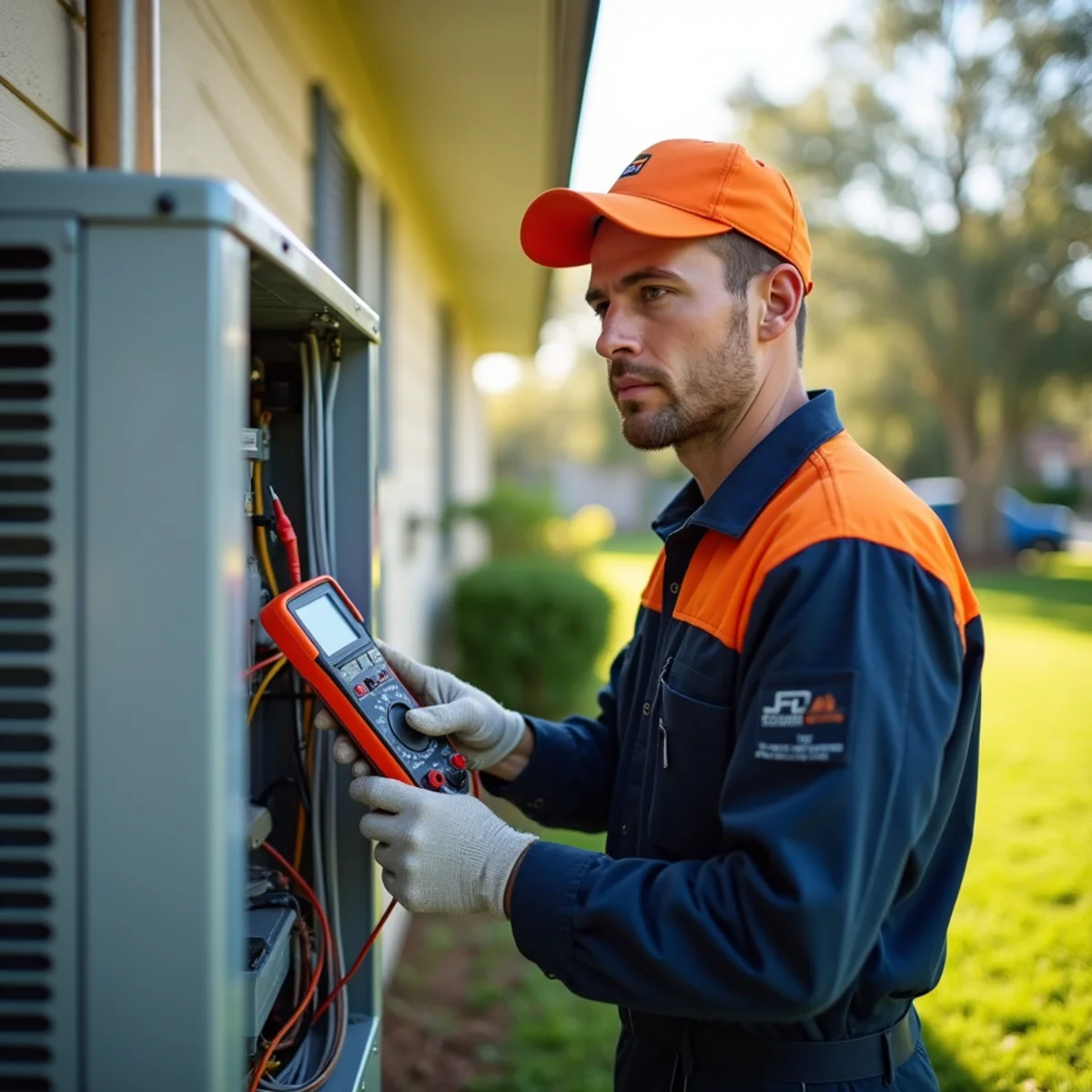
AC problems we fix in Orange Park homes
Most Orange Park cooling calls fall into a short list of failures that the long, humid season drives hard. The house will not drop below 80 even though the system runs. The unit blows warm air. Water pools under the air handler. The breaker trips. The outdoor unit hums but the fan sits still. Each symptom points to a different part, and the only way to know which is to test, not guess.
Because so many homes here were built in the 1970s and 1980s, the equipment is often a third or fourth system wired into original circuits, sitting in a hot garage or a tight closet, and fed by ductwork older than the unit. That context changes how a repair is diagnosed, and it is why a generic "recharge and go" rarely holds up past the next heat wave.
- AC runs constantly but the house stays warm or humid
- Warm air from the vents with the thermostat set to cool
- Water on the floor, ceiling stains, or a tripped float switch
- Ice on the copper lines or the indoor coil
- Breaker trips, humming, clicking, or a burnt smell
- Outdoor fan not spinning, or the unit will not start at all
Running but not cooling: capacitors, contactors, fan motors and compressors
When a system runs without cooling, the electrical parts are the first suspects. A failed run capacitor is the single most common summer failure in Northeast Florida — it is a small, inexpensive part, but a dying one stops the compressor or the condenser fan from starting, so the unit hums and then trips. A pitted contactor can do the same thing by failing to pass power cleanly.
If the capacitor and contactor test good, the technician moves to the fan motor and the compressor. A condenser fan that will not spin lets head pressure climb until the system shuts down on a safety. A compressor that is drawing high amps or has gone to ground is a larger decision, and that is where an honest repair-or-replace conversation starts rather than a surprise invoice.
Need an HVAC technician now?
We answer live 24/7 and give you a price before any work starts.
Water under the air handler: clogged drain lines, rusted pans and tripped float switches
A Florida air conditioner pulls gallons of moisture out of the air every day, and all of it leaves through one condensate drain. When algae or dust clog that line, the water backs up. A healthy system has a float switch that shuts the unit off before the water reaches your ceiling — so a "my AC randomly stops" complaint is very often a drain problem, not an equipment failure.
We clear the line, check the pan for rust and cracks, confirm the float switch works, and look at why it clogged in the first place. On older air handlers in hot attics, a rusted secondary pan or a sagging drain line will keep causing shutdowns until it is corrected, so we fix the cause, not just the puddle.
Frozen coils and refrigerant leaks in R-22, R-410A and newer R-454B systems
Ice on the indoor coil or the outdoor lines almost always means airflow or refrigerant. A dirty filter, a failing blower, or a low charge from a leak drops the coil below freezing, and a block of ice chokes off cooling entirely. The first step is always to shut the system off and let it thaw before anything can be measured accurately.
Refrigerant is not a consumable that gets "topped off" — if the charge is low, there is a leak. We locate it where possible and explain the options honestly. That conversation depends on the refrigerant: older R-22 systems are expensive and often not worth recharging, R-410A systems are the common middle ground, and the industry is now moving to lower-GWP R-454B on new equipment. A real leak diagnosis beats a seasonal recharge that fails again in weeks.
Need an HVAC technician now?
We answer live 24/7 and give you a price before any work starts.
Why systems fail here: 1970s homes, garage and closet air handlers, seven months of humidity
Orange Park's median home was built in 1974. That means attics full of 40- and 50-year-old ductwork, air handlers crammed into garages and hall closets where heat and dust shorten part life, and electrical that has been added onto over decades. Combine that with a cooling season that runs from April into October and relative humidity that sits near 75% on average, and you get equipment that simply works more hours than the same unit would up north.
More run hours mean capacitors, contactors, motors and drain lines wear out sooner, and undersized or leaky returns make the whole system strain. We factor that reality into every diagnosis instead of treating your home like a new build.
What an AC repair visit looks like, from call to cool air
The process is designed to remove surprises. You call, describe the symptom, and get safe first steps. A technician confirms the appointment window and the diagnostic policy. On arrival, they test the system — electrical, airflow, drainage, refrigerant behavior — and separate what they observed from what they suspect.
You then get the diagnosis and a price in writing before the repair begins. After you approve it, the technician completes the work, runs the system under real operating conditions, confirms the temperature split and drainage, and cleans up. Nothing gets opened up and billed without your say-so first.
Need an HVAC technician now?
We answer live 24/7 and give you a price before any work starts.
Repair or replace: judging a 10 to 15-year-old system in Florida
In this climate, a hard-worked AC often reaches the end of its service life around 10 to 15 years. Repair usually makes sense when the failure is a specific, identifiable part, the rest of the system is sound, and the fix restores reliable performance for a reasonable amount. Replacement deserves a closer look when failures keep recurring, the compressor is damaged, the system still cannot control humidity, or the repair starts to approach the value of a properly sized new system.
We lay out both paths with the facts — age, refrigerant, repair history, and what the ductwork is doing — so you decide, not a commissioned salesperson. If replacement is the smarter spend, we explain it on our AC installation page; if a repair gets you several more good seasons, we say that too.
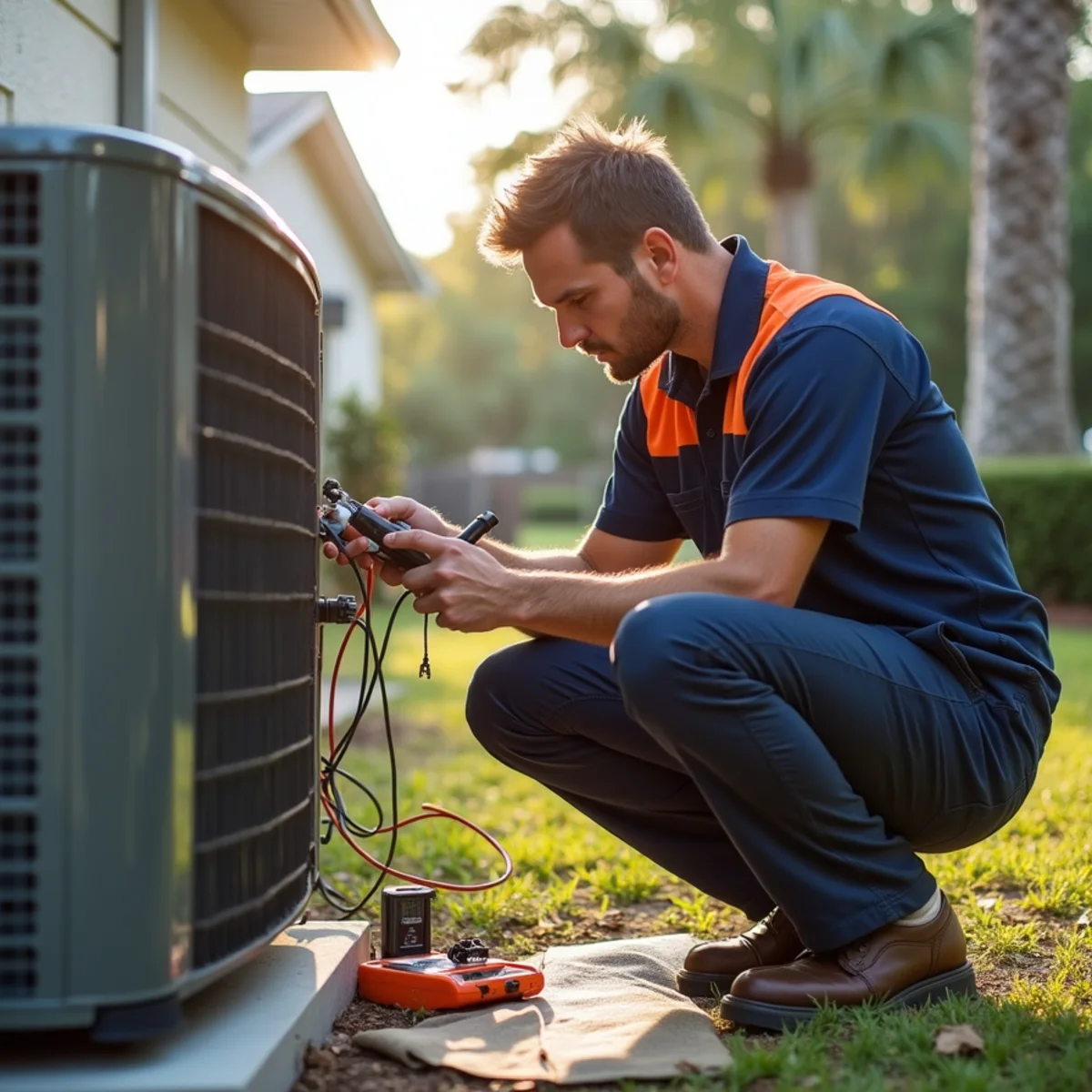
Our ac repair process in Orange Park
- 1
Call and triage
You call, describe the symptom, and get safe first steps. We confirm the appointment window and the diagnostic-fee policy before a technician is dispatched.
- 2
On-site diagnosis
The technician tests the electrical parts, airflow, drainage and refrigerant behavior, and separates what they observed from what they suspect — no guessing.
- 3
Written price, your approval
You get the repair scope and price in writing and approve it before any work begins. Nothing is opened up and billed without your say-so.
- 4
The repair
We complete the approved fix, from a run capacitor to a condensate drain or a coil, with parts on the truck wherever possible.
- 5
Test and clean up
We run the system under real operating conditions, confirm the temperature split and drainage, and leave the work area clean.
Why Orange Park homeowners choose us for ac repair
Diagnosis before parts
We find the actual failure instead of throwing a recharge at every warm-air call, so the repair holds past the next heat wave.
A price before work starts
You approve the written repair cost first — no surprise invoice when the job is finished.
Licensed, insured Florida contractors
Every HVAC technician we send is licensed and insured in Florida.
24/7, including the worst days
We answer live around the clock, so a July breakdown does not wait until Monday morning.
We know older Orange Park systems
Garage air handlers, undersized returns and R-22 units are routine here, not a surprise on arrival.
What affects the cost of ac repair
We never quote a price before diagnosing the system. These are the factors that shape it — and you always get the number in writing before any work starts.
- Which part failed (a capacitor is a small fix; a compressor or coil is a major one)
- Refrigerant type and whether a leak must be located and repaired
- How accessible the equipment is — attic, tight closet, or an easy garage unit
- Whether the diagnostic fee is credited toward the approved repair
- Time of day: nights, weekends and holidays can carry after-hours rates
- Any additional damage found, such as a rusted pan or failed float switch
Where we provide ac repair
We handle AC repair across Orange Park and the Clay County communities within about 30 minutes of our base. Fleming Island sits just across the Doctors Lake bridge, Oakleaf Plantation is out Argyle Forest Boulevard, and Middleburg is down Blanding Boulevard — each with its own mix of equipment and home ages we repair every week.
AC Repair — frequently asked questions
Still have a question? Just call.
A licensed HVAC technician can answer it and, if needed, be on the way. 24/7.